

NUMBERS AND MATHS

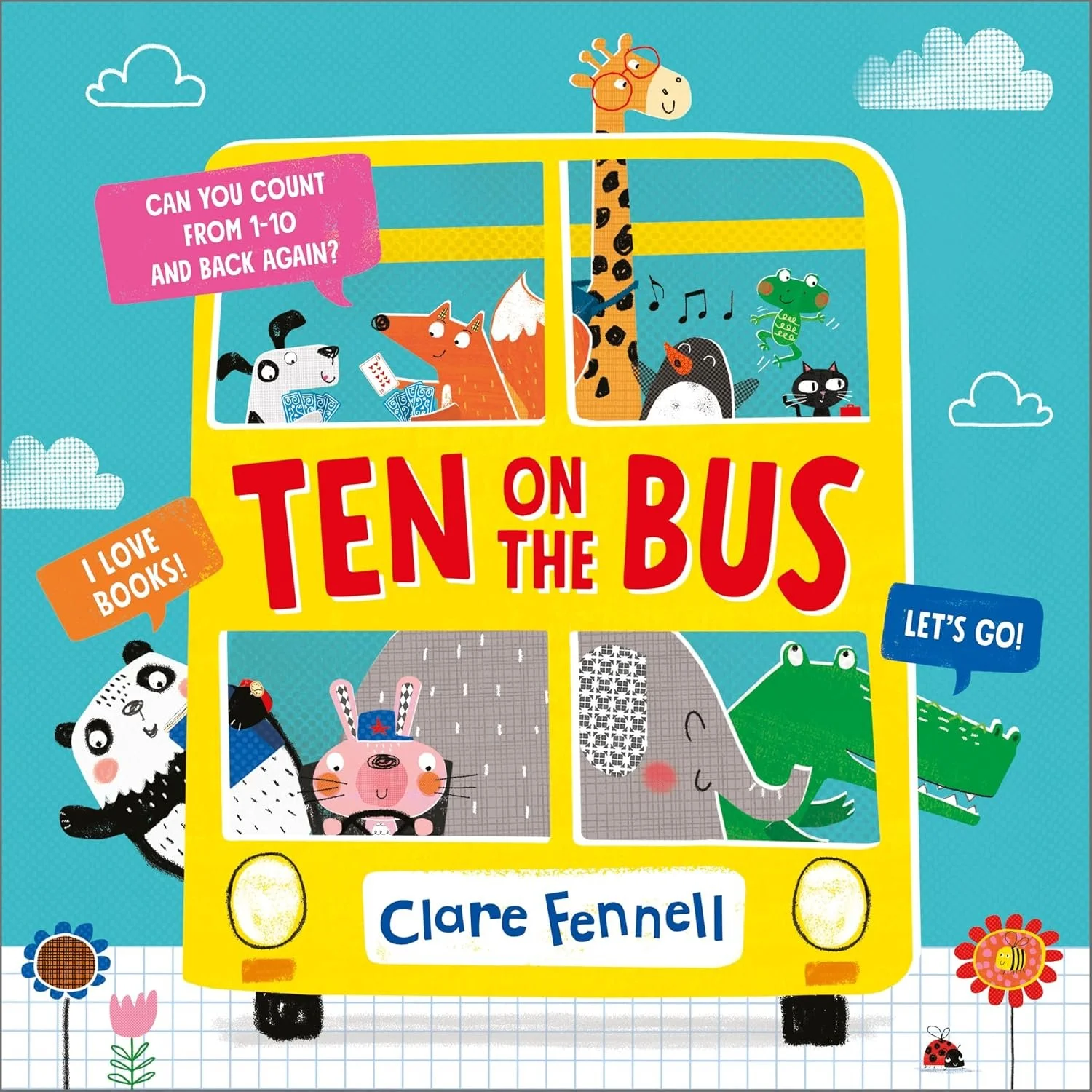
TEN ON THE BUS (Clare Fennell)
Ten on the Bus (Andersen Press, 2026) is a brilliant counting book, perfect for toddlers and early years children who are just starting to get curious about numbers.
The story follows ten animal friends on a bus, each one moving in their own particular way, so children get to count, join in, and copy the actions as the pages turn. That built in movement makes it such an engaging read aloud, little ones will be wiggling, stomping, and flapping along before they know it.
Beyond the counting itself, the book introduces early maths concepts such as one less as each animal hops off the bus, and counting in a group rather than simply reciting numbers in order. These are important foundational ideas for children to encounter well before they begin any formal maths learning.
The illustrations are bright and bold, with plenty of character in each animal, which helps sustain a toddler's attention and focus even after several read throughs, something that matters when repetition is such a key part of how young children learn.
(Reviewed by Kara Kiernan of THE BOOK TRAIN)
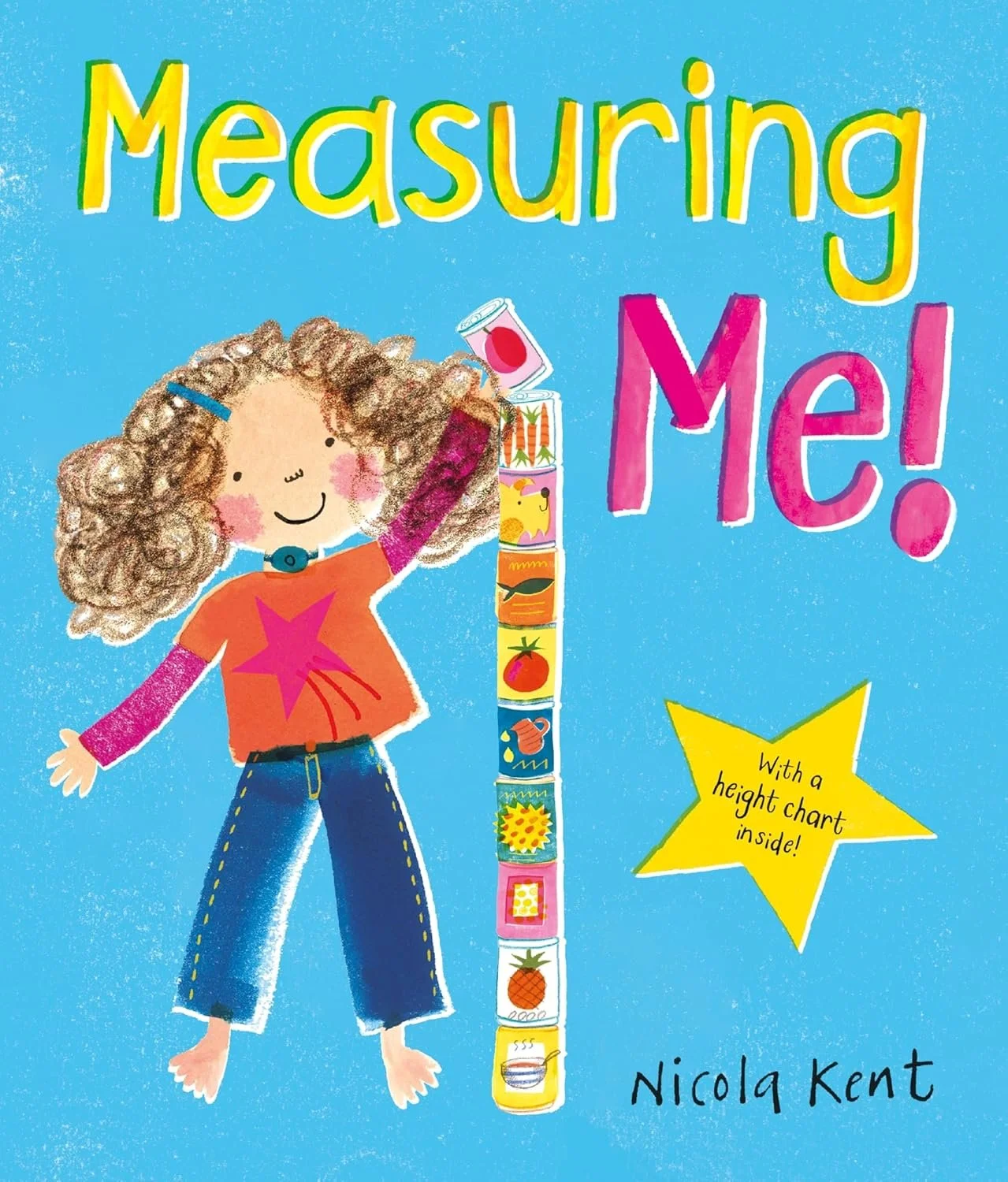
MEASURING ME (Nicola Kent)
Measuring Me (Little Tiger, 2024) is a bright and lively non-fiction picture book, packed with fascinating comparisons, which is sure to captivate young readers with a curiosity about themselves and the world around them.
Exploring the human body through the lens of measurement, the book introduces children to a range of concepts using familiar, everyday objects as reference points. From discovering that an average five-year-old stands as tall as ten tin cans, to learning that their veins could wrap almost three times around the world, each spread invites children to see themselves in a new and wonderful way, closing with the affirming message that every child is made of millions of numbers.
Alongside being a rich prompt for early mathematical thinking and non-standard measurement, the book also touches on the five senses and basic human physiology, making it a natural fit for All About Me topics in the Early Years. A pull-out height chart at the end adds an interactive dimension that will delight young readers long after the book has been put down.
(Reviewed by Kara Kiernan of THE BOOK TRAIN)
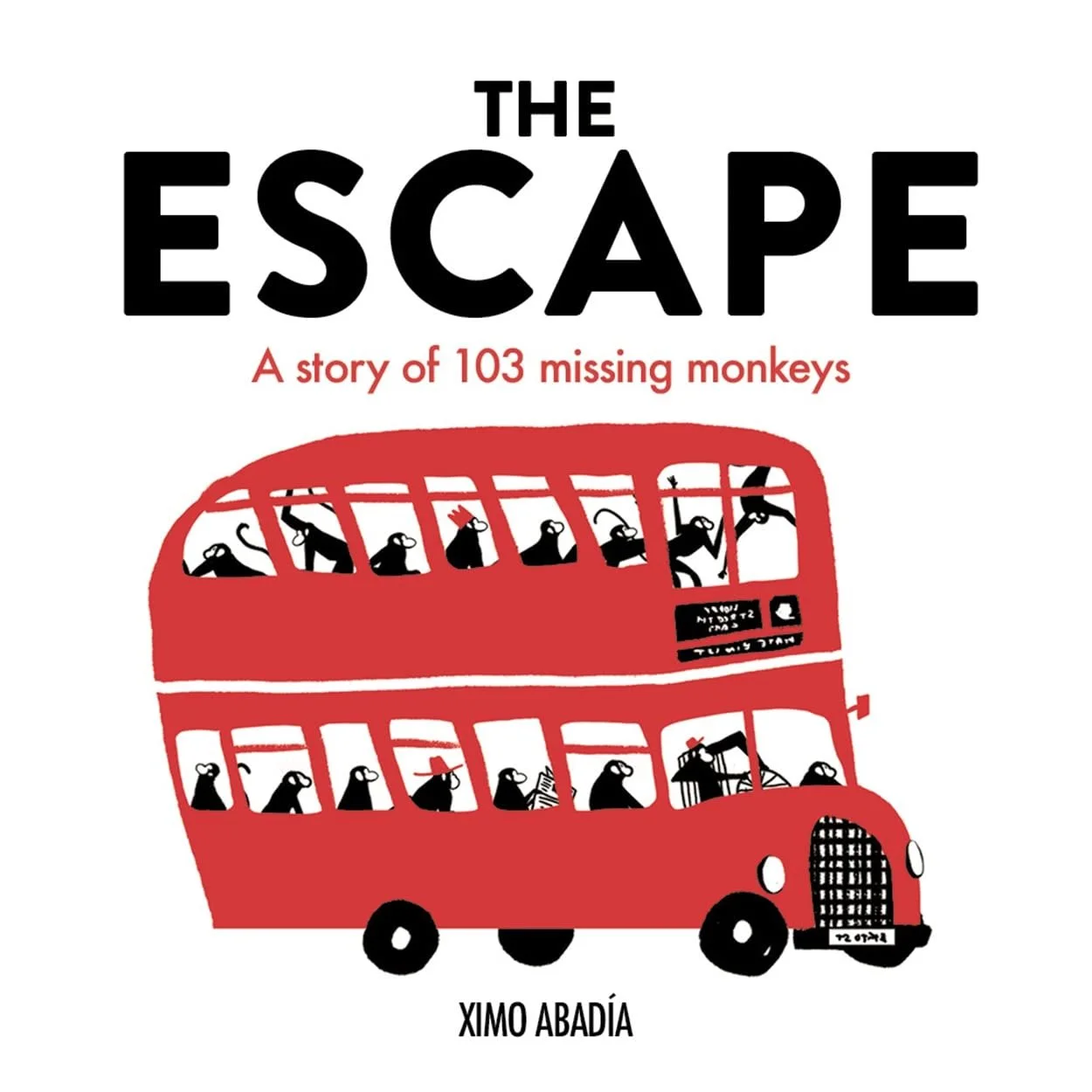
THE ESCAPE: A STORY OF 103 MISSING MONKEYS (Ximo Abadía)
The Escape: A story of 103 missing monkeys (Templar, 2023) is a counting adventure featuring bold monochrome illustrations with red highlights. This interactive book encourages children to use their counting and adding skills in a fun and exciting way.
The story stars a group of monkeys who escape from the zoo. Readers are challenged to find an increasing number of monkeys on each page, hidden amongst various busy cityscapes. This creates opportunities for cumulative counting, aiming for the target of 103. The red highlights within the high illustrations, provide interest and starting points for discussion - why were these specific elements chosen?
(Reviewed by Kara Kiernan of THE BOOK TRAIN)
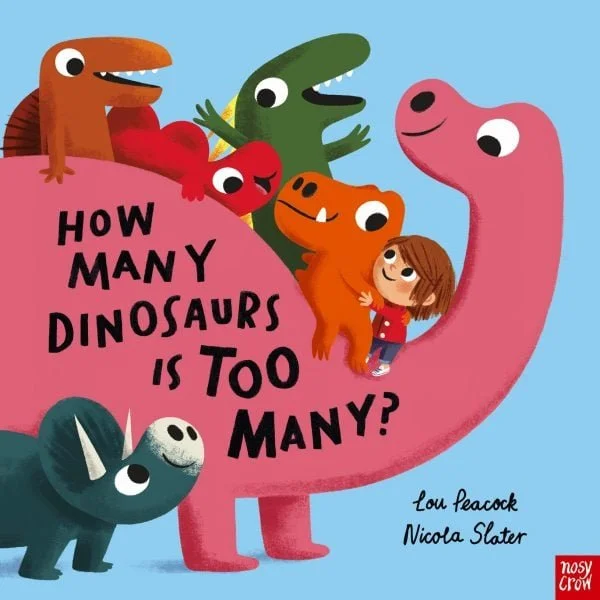
HOW MANY DINOSAURS IS TOO MANY? (Lou Peacock, Nicola Slater)
How Many Dinosaurs is Too Many? (Nosy Crow, 2024) is a bright and colourful text, with simple language patterns, which is sure to engage young readers keen to practise their early counting skills. It also highlights that it may not always be wise to wish for more than you have.
Focusing on the central character who adores dinosaurs, the story explains how they aren't satisfied with just one dinosaur, so they keep adding to their collection until they have ten. This ultimately causes havoc and results in all the dinosaurs being banished, causing the original dinosaur and central character to feel sad, encouraging them to reflect on their actions.
Alongside being a useful prompt for counting, the story subtly highlights the importance of valuing what you have and how special individuals are. This could prompt a wider discussion with small children linked to gratitude.
(Reviewed by Kara Kiernan of THE BOOK TRAIN)
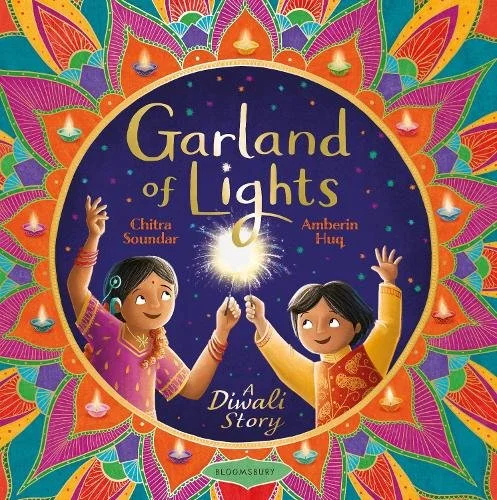
GARLAND OF LIGHTS (Chitra Soundar, Amberin Huq)
Garland of Lights (Bloomsbury, 2024) is a beautiful celebration of Diwali — but it’s more than a festival book. Through vibrant illustrations and a gentle, rhythmic text, Chitra Soundar and Amberin Huq offer the youngest readers a chance to connect with tradition and family and practise counting, too.
One lamp, two lamps, three lamps — each diya (lamp) represents a meaningful idea: kindness, forgiveness, hope, love. These Diwali values are presented in a child-friendly way that helps readers to reflect on the themes, whether they celebrate Diwali or not. Amberin Huq’s illustrations are bright and bold and glow with life.
This is a story that gently opens the door to conversations about family traditions and the ways we mark important moments together. The glossary and author note adds is great for curious minds.
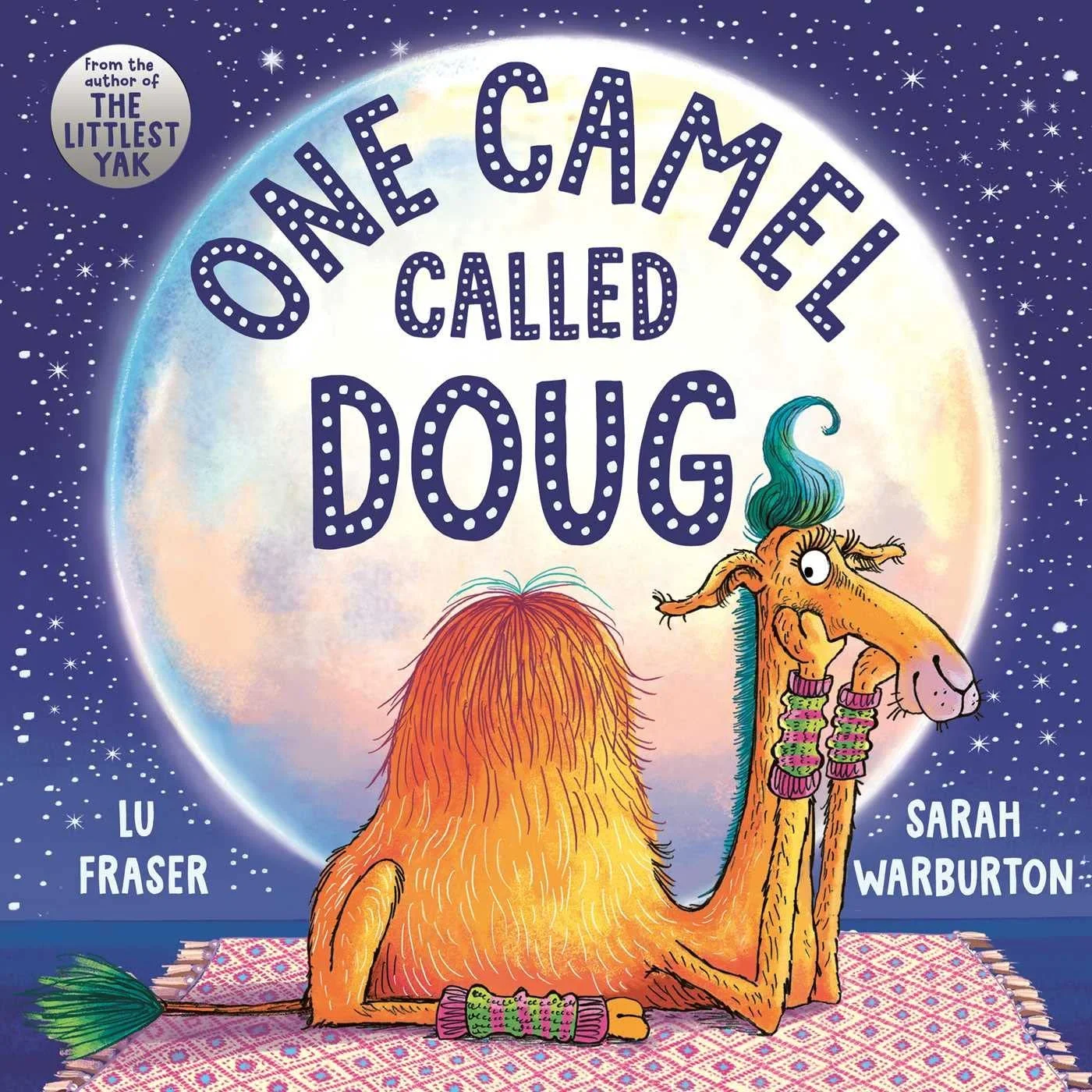
ONE CAMEL CALLED DOUG (Lu Fraser, Sarah Warburton)
One Camel Called Doug (Simon & Schuster, 2022) is a counting book with so much more. A brilliantly written rhyme with the funkiest camel illustrations you’ve ever seen, there is so much packed into this lively yet calming package.
Doug is one camel with one hump in one desert under one tree… But is that enough? Could life be more fun with more than one? One by one, more and more camels join Doug, and they discover all the things they can do as three, then four, then more! Eventually there is an entire party of humpity camels… But is that too much? When the camels speed off into the sunset, leaving Doug behind, it turns out he is perfectly happy with a bit of peace and quiet – just being ‘wonderfully one’ again.
This book shows that it’s all right to want time to yourself sometimes. Many readers will likely identify with Doug’s happiness of being left alone with a good book!
The language is so clever, using the rhyme and expectations from repeating patterns to help develop language skills, and building up the camel numbers to help with counting too. And let’s not forget the camels themselves! Sarah Warburton has made them incredibly funky and characterful, paired perfectly with the brilliant camel names from Lu Fraser (Brian, Rita, Bruce…).
Lu has published many successful books, but personally I think this one is a hidden gem. We all feel like one-derful Doug sometimes – and it helps to know that’s absolutely okay!
(Reviewed by Laura Baker - author of Squirrel and Bird)
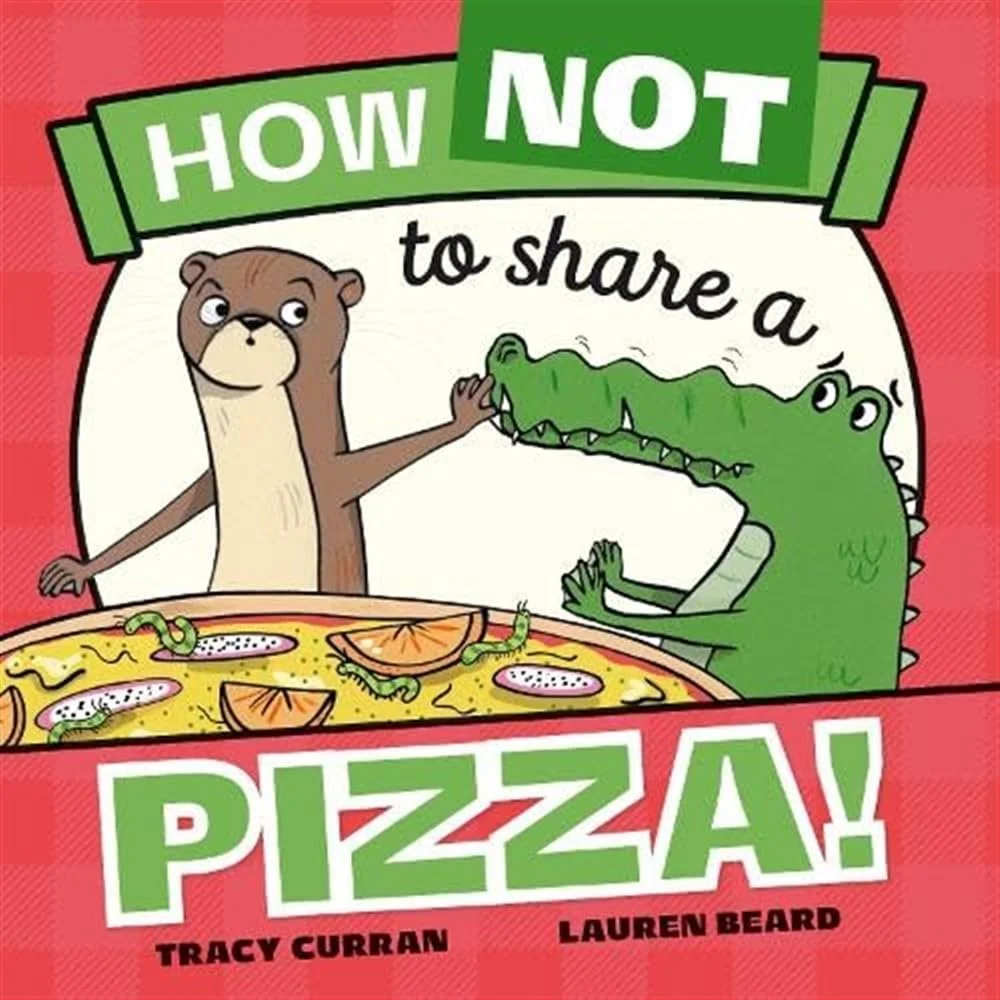
HOW NOT TO SHARE A PIZZA (Tracy Curran, Lauren Beard)
How Not to Share a Pizza! (Five Quills, 2025) is a delightful book that tackles the tricky topic of sharing with humour and heart. Through the story of Otto the otter and Ali the alligator, young readers are introduced to the challenges of fairness when two friends try to split a pizza exactly in half. As the situation spirals, the pair’s friendship is tested. But a little bit of creativity saves the day.
Tracy’s writing is playful yet informative, blending an engaging narrative with problem-solving. Lauren’s illustrations capture the charming characters and their silly pizza adventures. A great book to introduce the concept of sharing into equal halves.
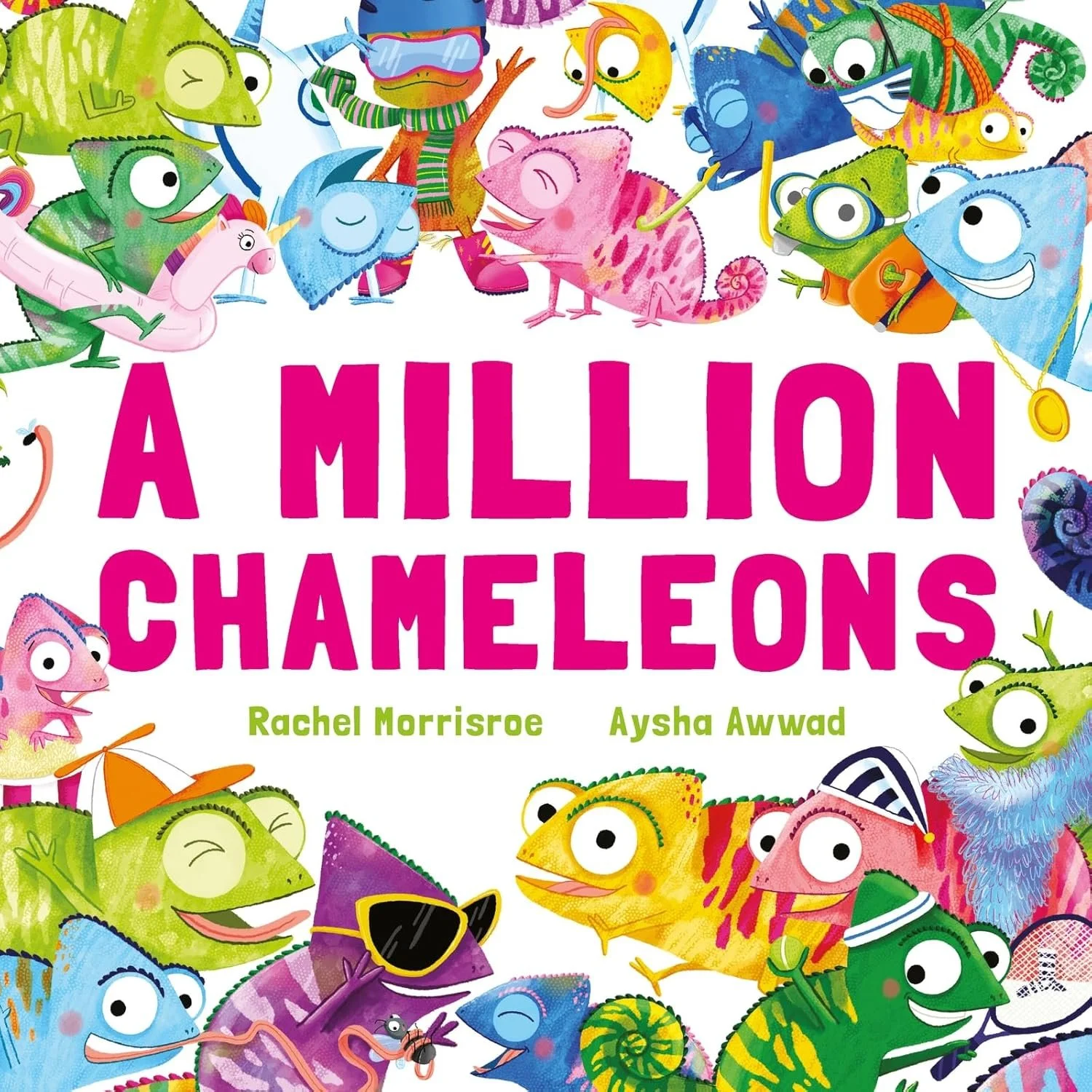
A MILLION CHAMELEONS (Rachel Morrisroe, Aysha Awward)
If you’ve ever wondered what chameleons really get up to when no one's looking… this book has the answer!
From flicking-pea-leons to needs-a-wee-leons, this story is bursting with imaginative wordplay and silly chameleon fun.
Rachel Morrisroe’s clever rhyming text makes it a joy to read aloud and children will love spotting Aysha Awward’s zany characters. This is a fun twist on an animal book, that also introduces children to quantities. Children will be able to practice their 1 to 1 matching as they count the groups of chameleons on the pages.
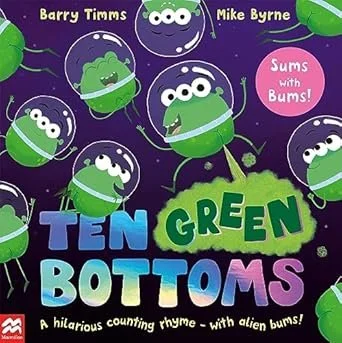
TEN GREEN BOTTOMS (Barry Timms, Mike Byrne)
What can be better than ten green alien bottoms on a mischievous adventure on Earth!? Inspired by the nursery rhyme Ten Green Bottles, this silly and energetic book counts down from ten as the alien bottoms encounter fountains, trolleys, diggers and more.
In the end, they zoom off in their wind-powered rocket... and return for a grand finale in a surprise gatefold spread!
The rhythm and interactive visuals make this a perfect pre-school read aloud. The bright, bouncy illustrations will ensure children have fun as they read and learn.
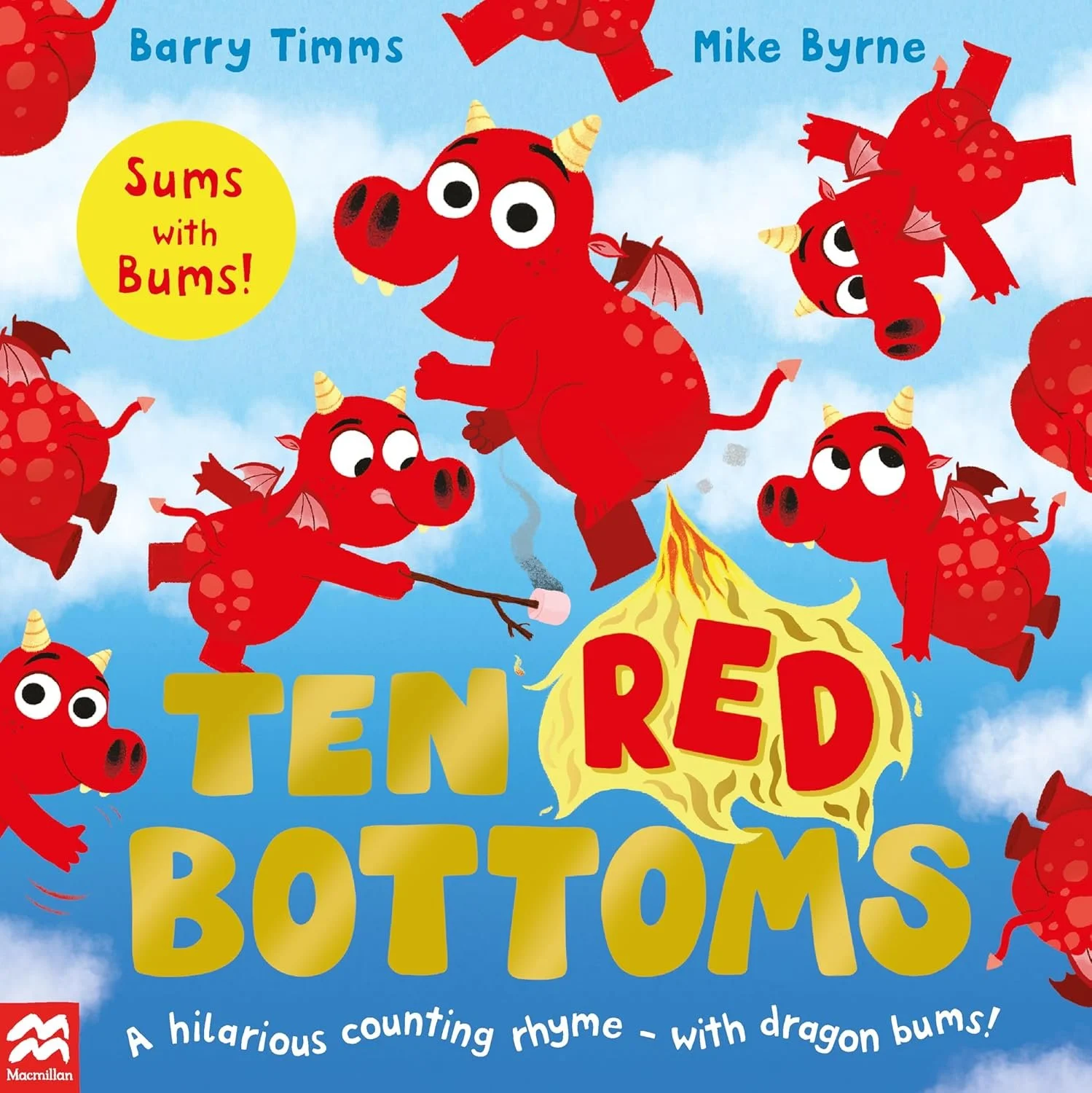
TEN RED BOTTOMS (Barry Timms, Mike Byrne)
What can be better than ten green bottoms?
Ten RED bottoms, of course!
Count down from 10 with cheeky little red-bottomed dragons in this playful twist on the classic nursery rhyme.
Inside a lively castle, the mischievous baby dragons are learning to breathe fire, fly and chomp, causing all sorts of hilarious mayhem.
As well as the clever ‘counting’ storyline, this book is packed with silly rhymes and humour that will delight both children and adults.
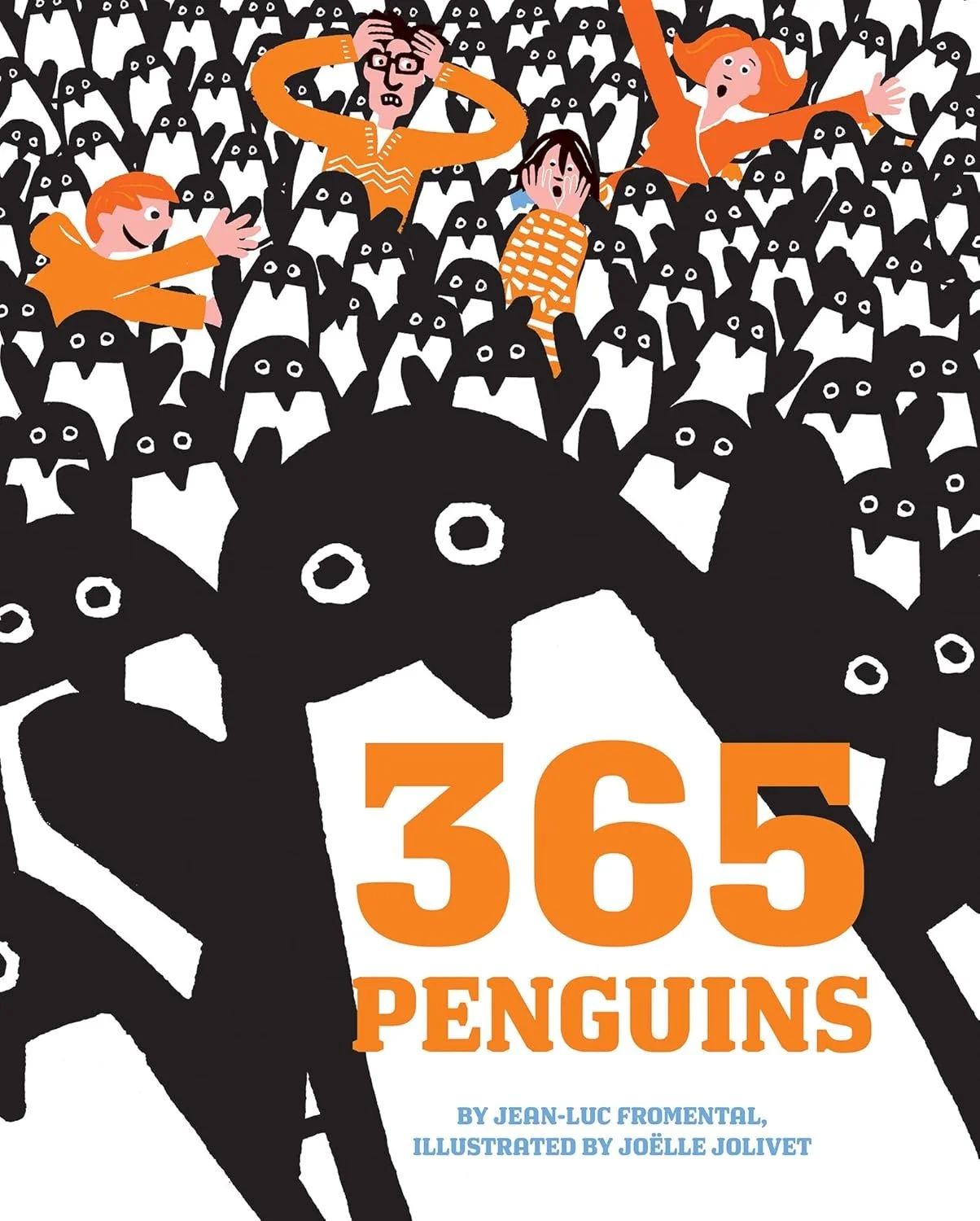
365 PENGUINS (Jean-Luc Fromental, Joëlle Jolivet)
365 Penguins (Abrams Books, 2017) is a wildly funny and clever picture book that transforms a simple premise into an exciting mathematical adventure. The story begins when a family receives a surprise delivery: one penguin. The next day, another one arrives. Soon, they're inundated - one penguin every single day for an entire year! What starts as cute and quirky, quickly becomes chaotic, as the family scrambles to feed, clean and make space for hundreds of increasingly demanding penguins.
Jean-Luc’s storytelling has a dry humour, complemented by Joëlle’s bold, graphic illustrations perfect for counting fun. Both entertaining and helpful, 365 Penguins is a fabulous blend of maths, mystery and absurdity.
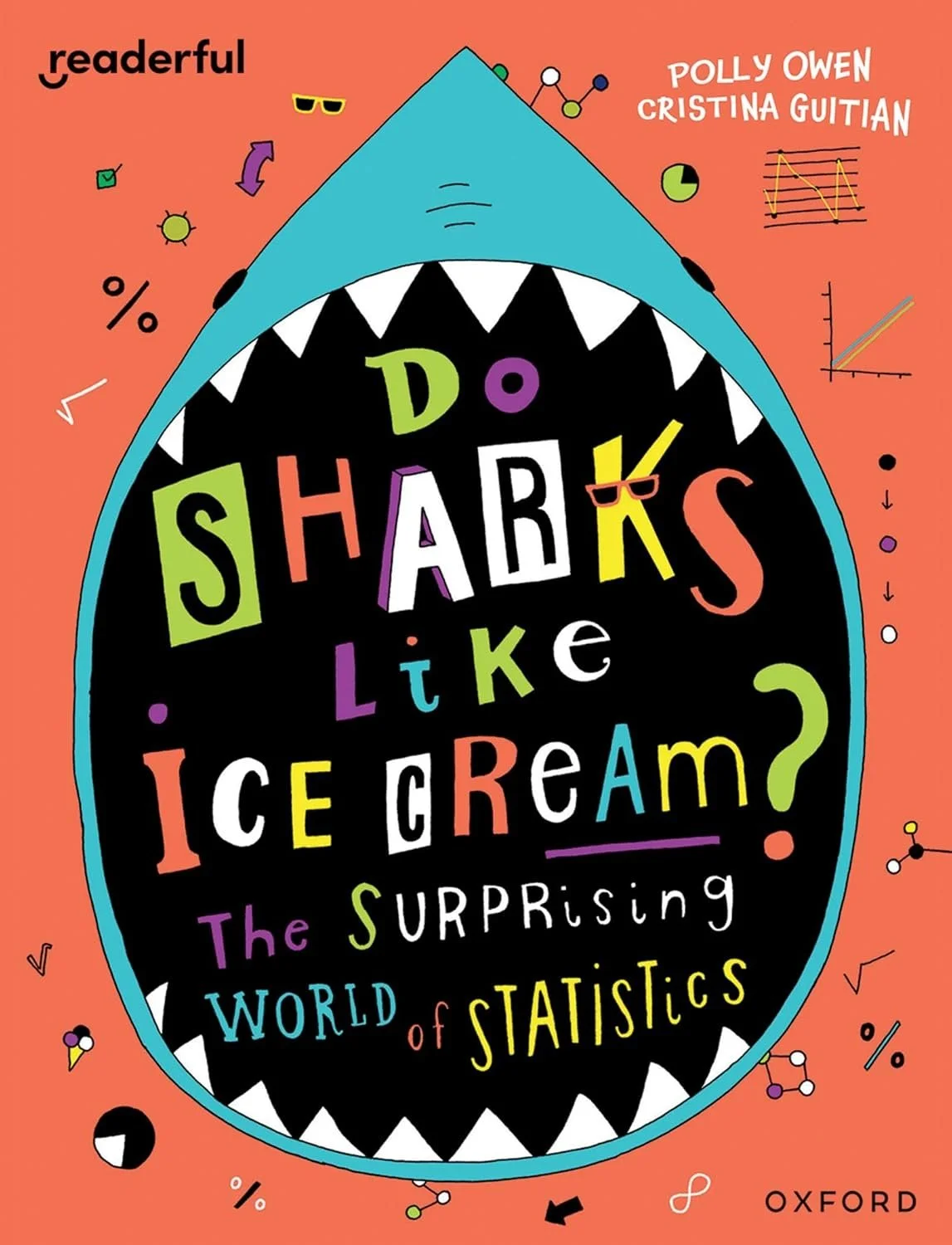
DO SHARKS LIKE ICE CREAM? (Polly Owen, Christina Guitian)
Do Sharks Like Ice Cream? (OUP, 2024) is a fascinating introduction to the world of statistics for curious minds aged 10 to 11.
Polly Owen uses clear, engaging language and a healthy dose of humour to explain how statistics work in the real world. Surprising facts about friendships, crime-solving and even how to win games, the book shows children how data shapes everything around us.
Cristina Guitian’s quirky, expressive illustrations bring each example to life, making abstract ideas easier to grasp.
Entertaining and informative, this book proves that statistics aren’t just numbers - they tell stories, spark discoveries, and yes, sometimes even explain shark attacks.
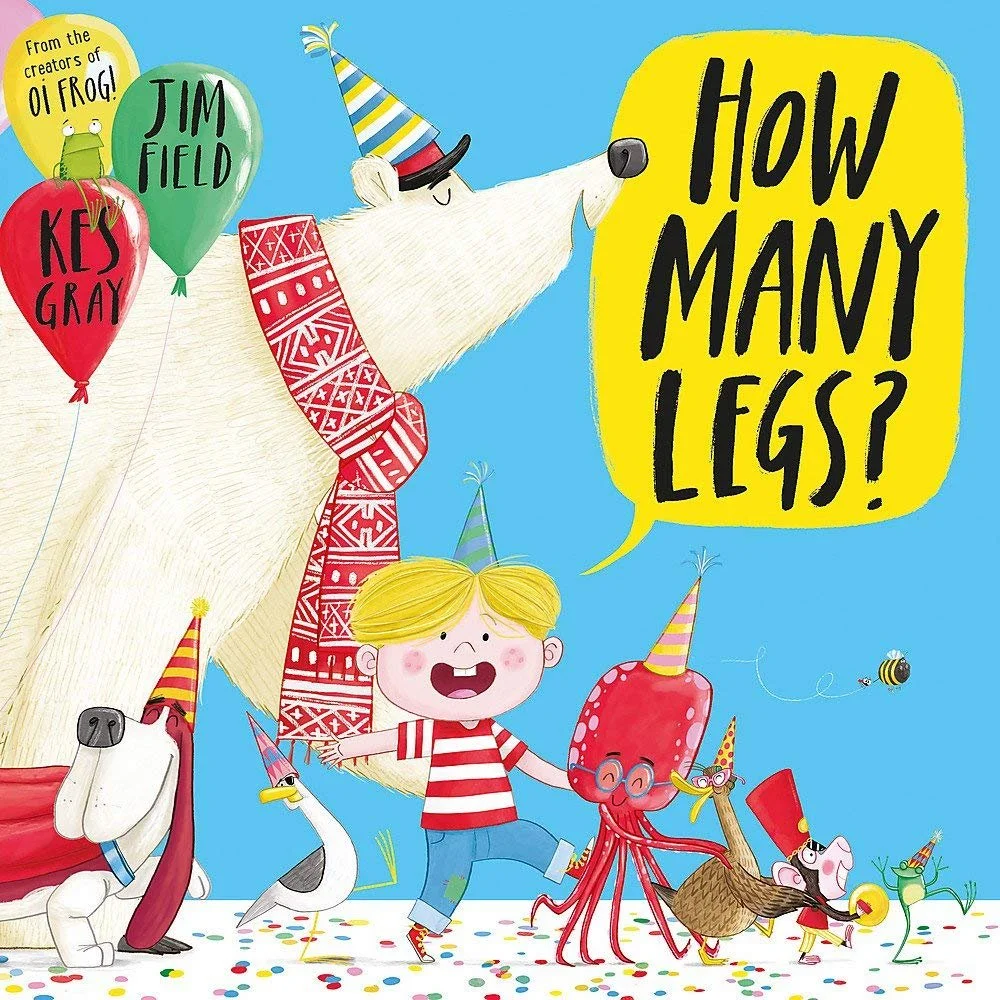
HOW MANY LEGS? (Kes Gray, Jim Field)
Ever wondered how many legs are in a room full of unexpected animal guests? In How Many Legs? (Hachette, 2005), a wild party unfolds when one curious child invites creature after creature - polar bears, squids, buffaloes, and more - prompting hilarious counting chaos as you try to keep up!
Kes Gray’s clever, rhyming text challenges young minds with lively, silly maths: “How many legs would there be if a polar bear came for tea?”
Jim Field fills every page with vibrant, busy, scenes that bring energy and add to the humour.
The rhythm and visual chaos makes for a fun and mathematical reading event!